

MELBOURNE, Australia — On a brisk autumn day in May, a meeting in a Melbourne community centre signified more than just a routine dialogue. It marked the confluence of two dedicated groups, united by a common language that transcends borders: the language of peace. On May 6, 2023, Advocates for Oromia (A4O) sat down with the Victoria Branch of HWPL Peace Education for a pivotal discussion, strengthening a local bridge toward global harmony.
The meeting, described by participants as “fundamental,” served to solidify the ongoing collaborative work within the Oromo community in Victoria. The focus is clear and critical: to systematically spread a culture of peace. This involves integrating principles of conflict resolution, mutual respect, and non-violence into the fabric of community life, ensuring that the values carried from the homeland are nurtured and formalized in the diaspora.
“A culture of peace isn’t passive; it is built through education and deliberate action,” shared a representative from A4O. “Our partnership with HWPL Peace Education provides a structured pathway to empower our youth and elders with the tools to be architects of harmony, both here and for the future of Oromia.”
A Step Further: The Global Peace Walk Initiative
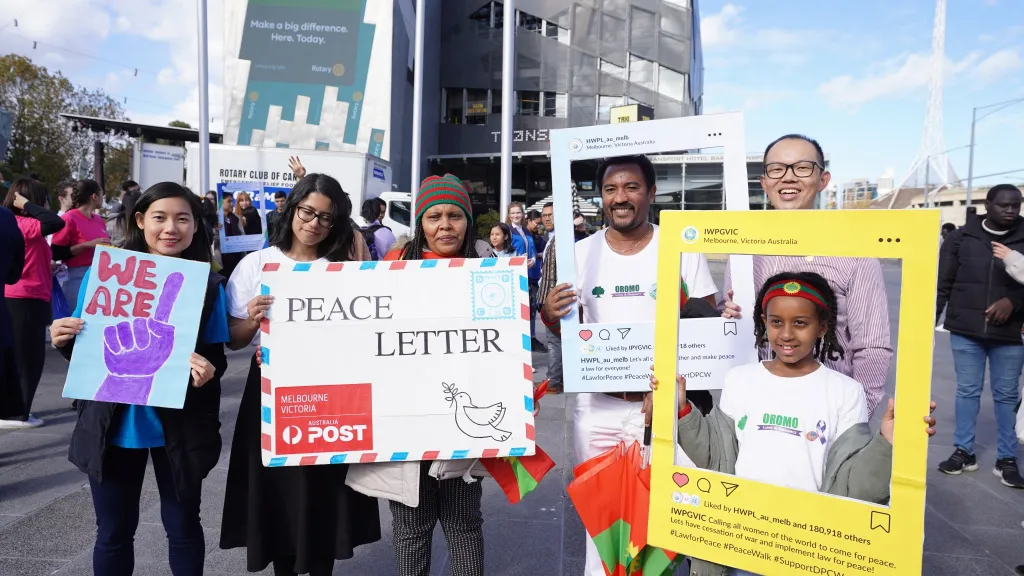
Beyond consolidating local efforts, the meeting unveiled plans for a symbolic and global act of unity. Attendees were introduced to the upcoming IPYG Peace Walk, an initiative of the International Peace Youth Group (IPYG). This event is particularly significant in 2023 as it commemorates the 10th anniversary of the Declaration of World Peace and the proclamation of the Declaration of Peace and Cessation of War (DPCW).
The DPCW is not merely a symbolic document. It is a comprehensive, legally-binding framework drafted by international law experts, which proposes concrete articles for nations to adopt. Its goals are ambitious yet precise: to encourage disarmament, mandate the peaceful settlement of disputes, foster interfaith dialogue, and transform the current paradigm of conflict into one of sustainable peace. Gaining recognition from various international organizations, governments, and civic groups worldwide, the DPCW is viewed as a pivotal step toward institutionalizing peace in international law.
The IPYG Peace Walk, therefore, is more than a march. It is a global chorus of footsteps advocating for the realization of these principles. For the Oromo community in Victoria—a people deeply familiar with the cost of conflict and the precious value of stability—participation in this walk represents an extension of their local peacebuilding onto the world stage.
Building a Future on a Foundation of Peace
The collaboration between A4O and HWPL Peace Education exemplifies a modern diaspora’s dual mission: to preserve cultural identity while actively contributing to universal human values. It recognizes that the work for peace begins in local communities, in conversations between neighbours, and in the education of children, before it can echo in the halls of global institutions.
As plans for the Peace Walk take shape, the Oromo community in Victoria stands poised to add its voice and its journey to a growing international movement. Their participation underscores a powerful truth: the quest for peace, whether for a specific nation or for the entire world, is interconnected. Each local effort to teach tolerance and each step taken in a global walk weaves another thread into the fabric of a more peaceful future—a future built from the ground up, starting in communities like this one, right here in Melbourne.
Leave a Reply