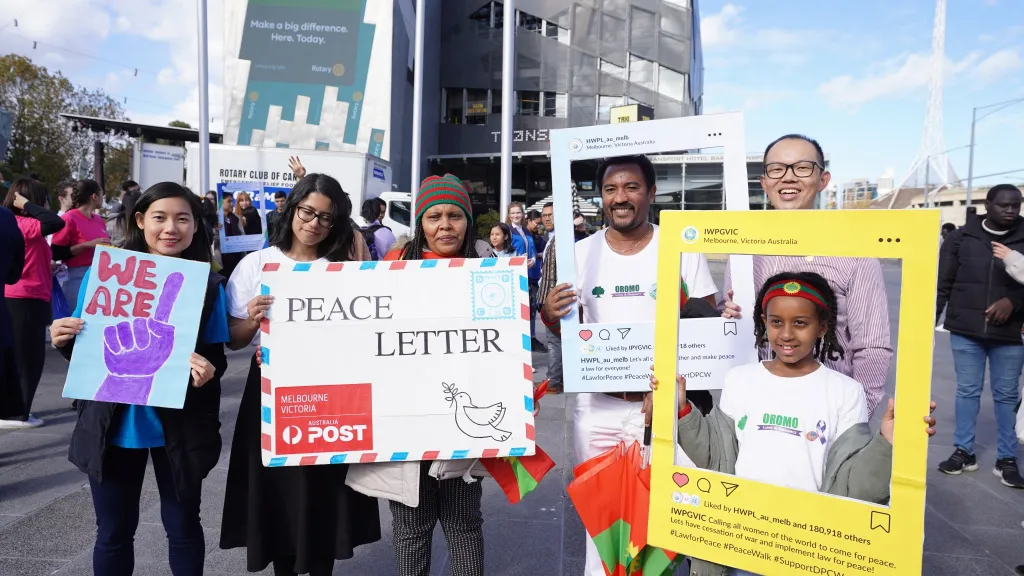
The establishment of an Oromia Peace Institute is not just a good idea; it is a profound necessity and an urgent imperative for the Oromia region and the wider Ethiopian state.
Here is a detailed breakdown of why such an institute is both necessary and urgent.
The Necessity: Addressing Deep-Rooted, Systemic Problems
The need for an Oromia Peace Institute stems from the unique and complex nature of the conflicts affecting Oromia, which are not adequately addressed by national or generic peacebuilding approaches.
1. The Centrality of the “Oromo Question”:
The “Oromo Question” is the core political issue in modern Ethiopia. It revolves around historical marginalization, the quest for self-determination, and the struggle for cultural and political space by the Oromo, Ethiopia’s largest ethnic group. An institute dedicated to Oromia would place this central issue at the heart of its work, providing a specialized platform to deconstruct it, analyze its manifestations, and propose tailored solutions.
2. The Multi-layered Nature of Conflict in Oromia:
The region is plagued by interconnected conflicts that a specialized institute could disentangle:
- State vs. Oromo Political Aspirations: The long-standing conflict between the federal government (and its predecessors) and various Oromo political and armed groups (like the OLA).
- Inter-ethnic Conflicts: Often state-instigated or exacerbated by resource competition, leading to violence between Oromos and neighboring ethnic groups (e.g., Somalis, Gurages, Amharas).
- Intra-Oromo Divisions: Political fragmentation and ideological differences within the Oromo political sphere itself.
- Farmer-Pastoralist Conflicts: Conflicts over land, water, and grazing routes, intensified by climate change and population pressure.
A generic peace institute would lack the nuanced understanding to address these intertwined layers effectively.
3. The Erosion of Traditional Conflict Resolution Mechanisms:
Oromo society has a rich tradition of indigenous governance and conflict resolution, notably the Gadaa system. Decades of centralized rule have weakened these traditional institutions. An Oromia Peace Institute could act as a bridge, researching, revitalizing, and integrating the wisdom of Gadaa—with its emphasis on democracy, justice, and peaceful transfer of power—into modern peacebuilding practices.
4. The Vacuum of Trusted, Neutral Mediation:
There is a deep-seated distrust between the Oromo public, Oromo political actors, and the central government. International mediators often lack the cultural and historical context, while national institutions are frequently seen as partisan. An institute rooted in Oromia but committed to academic rigor and neutrality could become a rare and trusted convener for dialogue and Track II diplomacy (unofficial, behind-the-scenes talks).
5. Data-Driven Policy Formulation:
Currently, policy responses to conflict in Oromia are often reactive, security-heavy, and based on political expediency rather than evidence. An institute could provide:
- Conflict Mapping: Detailed, real-time analysis of conflict drivers and hotspots.
- Policy Briefs: Research-based recommendations for lawmakers and administrators.
- Impact Assessment: Evaluating the effects of government policies on peace and stability in the region.
The Urgency: Averting Collapse and Seizing a Fleeting Opportunity
The situation in Oromia is not stable; it is deteriorating. The urgency for an institute stems from the immediate need to prevent a downward spiral and to capitalize on potential openings for peace.
1. The Human Catastrophe is Unfolding Now:
- Mass Displacement: Millions are internally displaced within Oromia, living in dire conditions.
- Humanitarian Crisis: Widespread food insecurity, lack of healthcare, and disruption of education are creating a lost generation.
- Atrocities and Human Rights Abuses: All sides are accused of committing atrocities, creating cycles of vengeance and trauma that will take generations to heal. Every day without a dedicated peace process means more lives lost and more suffering.
2. The Threat of State Collapse and Regional Contagion:
Oromia is the economic and geographic heart of Ethiopia. A continued state of conflict in Oromia directly threatens the viability of the Ethiopian state itself. Furthermore, instability in Oromia inevitably spills over into neighboring regions, fueling a wider cycle of ethnic violence and displacement that could destabilize the entire Horn of Africa.
3. The Narrowing Window for a Negotiated Settlement:
The longer the conflict between the government and armed groups like the OLA persists, the more militarized and radicalized the situation becomes. Hardliners on all sides gain influence. An institute could act now to:
- Prepare the Groundwork: Conduct research on potential ceasefire and negotiation frameworks.
- Build Cadres of Peacebuilders: Train a new generation of Oromo mediators, facilitators, and community leaders.
- Maintain Channels of Communication: Serve as an informal hub to keep lines of communication open between adversarial parties when official channels are frozen.
4. Countering the Dominance of War Narratives:
The public discourse is currently dominated by securitization, propaganda, and hate speech. An Oromia Peace Institute is urgently needed to:
- Amplify Alternative Voices: Give a platform to intellectuals, women, youth, and religious leaders who advocate for peace and reconciliation.
- Promote Counter-Narratives: Use research, media, and public forums to challenge misinformation and promote stories of coexistence and shared humanity.
Conclusion
An Oromia Peace Institute is necessary because the conflicts in Oromia are unique, complex, and central to Ethiopia’s future. It is urgent because the human cost is catastrophic and the opportunity for a peaceful resolution is slipping away.
It would not be a political entity but a center for knowledge, dialogue, and strategy. By focusing specifically on Oromia’s context, it would fill a critical gap, offering the best hope for moving from a state of perpetual violence to a sustainable peace founded on justice, self-determination, and the collective wisdom of its people. The establishment of such an institute is an investment not only in Oromia’s future but in the very survival of Ethiopia as a functional state.