What is the peace of the Oromo?

The peace of the Oromo, known as **"Nagaa Oromoo,"** is not merely the absence of war or conflict. It is a **holistic, spiritual, and socio-political principle** deeply embedded in their worldview, governance system, and daily life. It represents a state of harmony that must be maintained across three fundamental relationships.

Here is a breakdown of its dimensions and foundations:

---

### **1. The Three Dimensions of *Nagaa* (Peace)**

Oromo peace is conceptualized as a triad of interconnected harmonies:

1.  **Nagaa Waaqa** (Peace with God/the Creator):
    *   This is spiritual peace, achieved through living righteously, respecting the natural order, and maintaining a balance between the divine, human, and natural worlds. *Waaqa* (God) is seen as the source of all peace and balance.

2.  **Nagaa Lafa** (Peace with the Land/Nature):
    *   The Oromo have a sacred connection to their land (*lafa*). Peace with the land means environmental stewardship, sustainable use of resources, and respecting sacred sites like the *Odaa* (sycamore tree), the symbolic center of Gadaa governance.
    *   Injustice against the land (dispossession, pollution, exploitation) is a direct violation of *Nagaa*.

3.  **Nagaa Namaa** (Peace with People/Humanity):
    *   This is social and political peace. It encompasses justice (*siyaasa*), respectful coexistence, conflict resolution, and the smooth functioning of the social order as guided by the Gadaa system.

**True peace (*Nagaa*) cannot exist if one of these three pillars is broken.** An attack on the land is an attack on the people and a disruption of the divine order.

---

### **2. The Gadaa System: The Institutional Framework for Peace**

*Nagaa* is not passive; it is actively maintained and governed through the **Gadaa system**, the Oromo's indigenous democratic socio-political system.
*   **Cyclical Leadership:** Power rotates peacefully every eight years, preventing dictatorship and institutionalizing peaceful transfer of power.
*   **Laws of Peace:** Gadaa has codified laws (*Seera Nagaa*) that promote social harmony, justice, and environmental balance.
*   **Conflict Resolution:** Dedicated councils of elders (*Jaarsa Biyyaa*) mediate disputes using restorative justice principles, aiming for reconciliation (*araara*) and compensation (*gumaa*) rather than punitive punishment.
*   **Collective Security:** The defense of *Nagaa* is a collective duty, but declarations of war are ritualized, collective decisions, not made by individuals.

---

### **3. *Safuu*: The Moral and Ethical Code**

*Safuu* is the concept of sacred balance, respect, and moral boundaries. It is the daily practice that upholds *Nagaa*.
*   It dictates profound respect for elders, guests, women, and all living things.
*   Violating *Safuu* (e.g., breaking an oath, harming a guest, disrespecting nature) is believed to bring imbalance, curse (*abaarsa*), and conflict to the individual and community.
*   Upholding *Safuu* is essential for maintaining personal integrity and social *Nagaa*.

---

### **4. *Irreechaa*: The Ritual Celebration of Peace and Renewal**

The annual *Irreechaa* (thanksgiving) festival at riverbanks is a massive cultural enactment of *Nagaa*.
*   It is a time for collective prayer, thanksgiving to *Waaqa*, and **reconciliation**.
*   Communities forgive debts, resolve lingering disputes, and bless one another for the coming year, reinforcing social bonds and resetting the community in a state of peace.

---

### **Why This Concept is Profound and Unique**

1.  **It is Eco-Spiritual:** Peace is inseparable from environmental health and spiritual righteousness.
2.  **It is Governed:** Peace is not a vague hope but a social system with laws, institutions, and processes.
3.  **It is Active:** *Nagaa* requires active maintenance through justice, ritual, and ethical living (*Safuu*).
4.  **It is Collective:** The peace of the individual is tied to the peace of the community, the land, and the cosmos.

### **Modern Context and Challenges**

Today, the concept of *Nagaa Oromoo* is both a **cultural bedrock and a political statement.**
*   **Resistance:** For the Oromo, who have faced historical marginalization, land dispossession, and political violence from the Ethiopian state, the call for *Nagaa* is a call for the right to live in their own holistic peace—to practice Gadaa, speak their language, and steward their land.
*   **Unifying Ideal:** Amidst internal Oromo political differences, *Nagaa Oromoo* serves as a unifying cultural ideal that transcends partisan politics.
*   **A Model for the Future:** Many see the Gadaa system's principles of democracy, term limits, and ecological balance as a viable model for a more peaceful Ethiopia and world.

**In essence, the peace of the Oromo is a complete philosophy of life.** It is the ultimate goal of their social system—a state of holistic harmony that they have strived to protect, practice, and pass down through generations, even in the face of immense adversity. It is not just what they want; it is, in a fundamental way, **who they are.**

Why is peace in Oromia necessary?
Peace in Oromia is not just a political goal—it is an **existential, cultural, economic, and human necessity**. It is the essential condition for survival, justice, and flourishing for the Oromo people and for the stability of Ethiopia and the Horn of Africa.

Here’s why peace in Oromia is not optional but urgently necessary:

---

### **1. Human Survival and Dignity**
- **To Stop the Bleeding:** Oromia has seen decades of state violence, extrajudicial killings, mass arrests, displacement, and armed conflict. Peace is necessary first and foremost **to save lives**—to end the direct physical violence that has caused immense suffering.
- **To Heal Trauma:** Generations have grown up amid conflict, fear, and loss. Peace is required to create the safety needed for **psychological healing** from collective and intergenerational trauma.

---

### **2. Cultural Survival and Revitalization**
- **To Practice *Nagaa Oromoo*:** As previously described, peace (*Nagaa*) is the core of Oromo identity—harmony with God, land, and people. Without peace, the Oromo cannot live out their foundational cultural and spiritual values.
- **To Revive and Protect Heritage:** Conflict destroys cultural sites (like *Odaa*), disrupts the transmission of language, and makes rituals like *Irreechaa* vulnerable. Peace allows for the **revival of Gadaa systems**, language education, and cultural ceremonies.

---

### **3. Land, Livelihood, and Environmental Justice**
- **To Protect *Nagaa Lafa* (Peace with the Land):** Oromia is the economic backbone of Ethiopia—its farmland feeds the nation, and its resources fuel industry. War and instability lead to:
  - Land grabs and displacement of farmers.
  - Environmental degradation from militarization.
  - Famine due to disrupted agriculture.
- **Economic Catastrophe Prevention:** Conflict destroys markets, scares away investment, and diverts resources to weapons instead of schools, hospitals, and infrastructure. Peace is necessary for **development that benefits the people**.

---

### **4. Political Stability for Ethiopia and the Region**
- **Oromia is the Keystone:** Oromia is the largest region in Ethiopia by population and geography. Without peace in Oromia, there can be **no lasting stability in Ethiopia**.
- **Regional Domino Effect:** Conflict in Oromia spills over—creating refugees, straining neighboring regions, and providing fertile ground for extremist groups. Peace in Oromia is critical for **security across the Horn of Africa**.

---

### **5. To Fulfill the Oromo Quest for Self-Determination**
- **A Just Political Settlement:** The Oromo struggle is, at its heart, for **dignity, self-rule, and recognition**. Endless conflict only deepens grievances. Peace is necessary to create space for a **political solution**—whether meaningful federalism, autonomy, or negotiated restructuring—that addresses historical injustices.
- **To Move from Resistance to Governance:** The Oromo political leadership needs peace to transition from a liberation struggle to **governing effectively**, delivering services, and building institutions based on Gadaa principles.

---

### **6. To Prevent Genocide and Atrocity**
- **Historical Precedent:** The patterns of violence—mass arrests, hate speech, targeted killings, siege tactics—echo early warning signs of mass atrocities. Peace is necessary to **break this cycle** before it escalates into wider genocide.
- **Interethnic Coexistence:** Oromia is multi-ethnic. Sustained conflict risks exploding into **communal violence** between Oromo and non-Oromo communities. Peace is required to rebuild intergroup trust and coexistence.

---

### **7. For the Youth and Future Generations**
- **Lost Generation Prevention:** Without peace, youth are either recruits for armed groups, victims of violence, or hopeless refugees. Peace is needed to give them **education, opportunity, and a future** in their homeland.
- **To Preserve Knowledge and Innovation:** Conflict drives out intellectuals, artists, and entrepreneurs. Peace allows a society to **invest in its human capital** and contribute to global knowledge.

---

### **8. Moral and Spiritual Imperative**
- **The *Safuu* Principle:** Living in conflict is a violation of the Oromo moral code (*Safuu*), which demands balance, respect, and harmony. Peace is necessary to live ethically.
- **A Global Example:** Oromo peace traditions (Gadaa, restorative justice, ecological balance) offer **alternative models for governance and conflict resolution** in a war-torn world. Achieving peace in Oromia would be a testament to the power of indigenous systems.

---

### **Conclusion: The Cost of No Peace**

The **absence of peace in Oromia means**:
- Continued humanitarian crisis (hunger, displacement, disease).
- The erosion of a rich, ancient culture.
- A failed state at the heart of the Horn of Africa.
- Generations condemned to trauma and hatred.
- The loss of a potential model for ecological democracy.

**Peace in Oromia is necessary because without it, there is only suffering, injustice, and the slow death of a people's soul and future.** It is the prerequisite for everything else—development, democracy, cultural vitality, and human dignity. It is not merely the end of violence; it is the beginning of life as it was meant to be lived, in *Nagaa*.

Why the Oromia Peace Institute is both necessary?

The establishment of an Oromia Peace Institute is not just a good idea; it is a profound necessity and an urgent imperative for the Oromia region and the wider Ethiopian state.

Here is a detailed breakdown of why such an institute is both necessary and urgent.

The Necessity: Addressing Deep-Rooted, Systemic Problems
The need for an Oromia Peace Institute stems from the unique and complex nature of the conflicts affecting Oromia, which are not adequately addressed by national or generic peacebuilding approaches.

1. The Centrality of the “Oromo Question”:
The “Oromo Question” is the core political issue in modern Ethiopia. It revolves around historical marginalization, the quest for self-determination, and the struggle for cultural and political space by the Oromo, Ethiopia’s largest ethnic group. An institute dedicated to Oromia would place this central issue at the heart of its work, providing a specialized platform to deconstruct it, analyze its manifestations, and propose tailored solutions.

2. The Multi-layered Nature of Conflict in Oromia:
The region is plagued by interconnected conflicts that a specialized institute could disentangle:

State vs. Oromo Political Aspirations: The long-standing conflict between the federal government (and its predecessors) and various Oromo political and armed groups (like the OLA).
Inter-ethnic Conflicts: Often state-instigated or exacerbated by resource competition, leading to violence between Oromos and neighboring ethnic groups (e.g., Somalis, Gurages, Amharas).
Intra-Oromo Divisions: Political fragmentation and ideological differences within the Oromo political sphere itself.
Farmer-Pastoralist Conflicts: Conflicts over land, water, and grazing routes, intensified by climate change and population pressure.
A generic peace institute would lack the nuanced understanding to address these intertwined layers effectively.
3. The Erosion of Traditional Conflict Resolution Mechanisms:
Oromo society has a rich tradition of indigenous governance and conflict resolution, notably the Gadaa system. Decades of centralized rule have weakened these traditional institutions. An Oromia Peace Institute could act as a bridge, researching, revitalizing, and integrating the wisdom of Gadaa—with its emphasis on democracy, justice, and peaceful transfer of power—into modern peacebuilding practices.

4. The Vacuum of Trusted, Neutral Mediation:
There is a deep-seated distrust between the Oromo public, Oromo political actors, and the central government. International mediators often lack the cultural and historical context, while national institutions are frequently seen as partisan. An institute rooted in Oromia but committed to academic rigor and neutrality could become a rare and trusted convener for dialogue and Track II diplomacy (unofficial, behind-the-scenes talks).

5. Data-Driven Policy Formulation:
Currently, policy responses to conflict in Oromia are often reactive, security-heavy, and based on political expediency rather than evidence. An institute could provide:

Conflict Mapping: Detailed, real-time analysis of conflict drivers and hotspots.
Policy Briefs: Research-based recommendations for lawmakers and administrators.
Impact Assessment: Evaluating the effects of government policies on peace and stability in the region.
The Urgency: Averting Collapse and Seizing a Fleeting Opportunity
The situation in Oromia is not stable; it is deteriorating. The urgency for an institute stems from the immediate need to prevent a downward spiral and to capitalize on potential openings for peace.

1. The Human Catastrophe is Unfolding Now:

Mass Displacement: Millions are internally displaced within Oromia, living in dire conditions.
Humanitarian Crisis: Widespread food insecurity, lack of healthcare, and disruption of education are creating a lost generation.
Atrocities and Human Rights Abuses: All sides are accused of committing atrocities, creating cycles of vengeance and trauma that will take generations to heal. Every day without a dedicated peace process means more lives lost and more suffering.
2. The Threat of State Collapse and Regional Contagion:
Oromia is the economic and geographic heart of Ethiopia. A continued state of conflict in Oromia directly threatens the viability of the Ethiopian state itself. Furthermore, instability in Oromia inevitably spills over into neighboring regions, fueling a wider cycle of ethnic violence and displacement that could destabilize the entire Horn of Africa.

3. The Narrowing Window for a Negotiated Settlement:
The longer the conflict between the government and armed groups like the OLA persists, the more militarized and radicalized the situation becomes. Hardliners on all sides gain influence. An institute could act now to:

Prepare the Groundwork: Conduct research on potential ceasefire and negotiation frameworks.
Build Cadres of Peacebuilders: Train a new generation of Oromo mediators, facilitators, and community leaders.
Maintain Channels of Communication: Serve as an informal hub to keep lines of communication open between adversarial parties when official channels are frozen.
4. Countering the Dominance of War Narratives:
The public discourse is currently dominated by securitization, propaganda, and hate speech. An Oromia Peace Institute is urgently needed to:

Amplify Alternative Voices: Give a platform to intellectuals, women, youth, and religious leaders who advocate for peace and reconciliation.
Promote Counter-Narratives: Use research, media, and public forums to challenge misinformation and promote stories of coexistence and shared humanity.
Conclusion
An Oromia Peace Institute is necessary because the conflicts in Oromia are unique, complex, and central to Ethiopia’s future. It is urgent because the human cost is catastrophic and the opportunity for a peaceful resolution is slipping away.

It would not be a political entity but a center for knowledge, dialogue, and strategy. By focusing specifically on Oromia’s context, it would fill a critical gap, offering the best hope for moving from a state of perpetual violence to a sustainable peace founded on justice, self-determination, and the collective wisdom of its people. The establishment of such an institute is an investment not only in Oromia’s future but in the very survival of Ethiopia as a functional state.
Interviews
We’re OPI
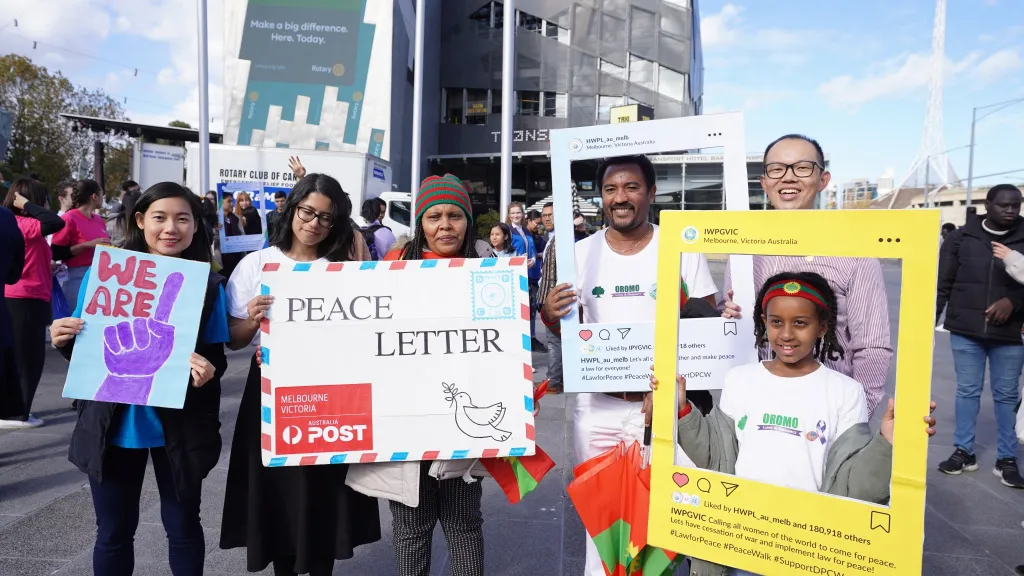
Welcome to OPI, is an independent research and policy peace institute. Our aim is to educate policymakers and the wider public on the Oromo people and the region of Oromia. We are dedicated to ensuring a non-derivative presence of the Oromos in policy circles that have all too often disregarded collective Oromia agency.
Let’s connect
Join the fun!
Stay updated with our latest tutorials and ideas by joining our newsletter.