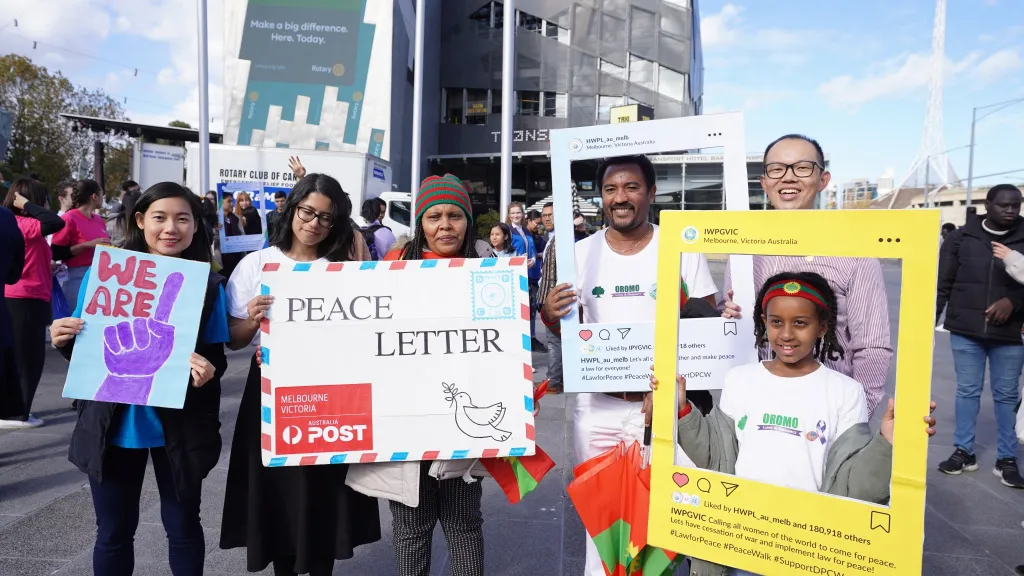
1. “Peace grows in the family. Such peace is the foundation of peace in Oromia.”
This statement is not merely a sentiment; it is a sociological and political principle. It recognizes that societal peace (Nagaa Oromiyaa) is not built top-down by treaties or armies, but bottom-up, cultivated in the first and most fundamental unit of society: the family (maatii).
I. How Peace Grows in the Family: The Nagaa Maatii Model
A peaceful Oromo family becomes a living classroom for the holistic peace (Nagaa) that defines Oromo civilization:
- Practice of Safuu (Sacred Balance & Respect):
- Children learn respect (kabajaa) by observing parents honor elders (Jaarsa).
- Spouses model gender peace and partnership.
- Moral boundaries are taught through guidance, not violence, instilling an internal moral compass.
- Cultivation of Nagaa Namaa (Peace Among People):
- Family conflicts become lessons in dialogue, active listening, and forgiveness (dhiifama).
- The home is a sanctuary from external strife, a place of emotional security and unconditional support.
- Daily rituals (shared meals, prayers, stories) reinforce bonds of belonging and mutual care.
- Connection to Nagaa Lafa (Peace with the Land):
- Families that garden together, care for animals, or simply discuss their ancestry and land teach stewardship.
- Children learn their place within the natural order, not as conquerors of the land, but as its grateful children and protectors.
- Nurturing of Nagaa Waaqa (Spiritual Peace):
- Whether through prayer, reflection, or the sharing of proverbs (mammaaksa) and stories, families connect daily life to a larger spiritual and ethical order.
II. How Family Peace Becomes the Foundation for Oromia
This family-cultivated peace does not stay within the home. It radiates outward, creating the essential building blocks for a peaceful Oromia:
- It Produces Peace-Capable Citizens:
- A child raised in Nagaa Maatii enters society with emotional intelligence, conflict-resolution skills, and a deep-seated respect for others. They are far less susceptible to manipulation by hate speech or recruitment into violence.
- It Strengthens Community Fabric (Ollaa):
- Peaceful families naturally extend their ethics to neighbors. They are the first to mediate local disputes, support those in need, and participate in communal work (jigee/daboo). They form the backbone of a resilient, self-regulating community.
- It Creates Demand for Peaceful Governance:
- Citizens who know peace in their hearts and homes will reject leaders who thrive on division and violence. They will demand accountability, justice, and governance that reflects the Safuu and Nagaa they learned as children.
- It Guarantees Cultural Continuity:
- The family is the primary vessel for transmitting language, Gadaa values, and the Oromo worldview. A peaceful family ensures this transmission occurs with love and pride, fortifying cultural identity against erasure or radicalization.
Conclusion: The Strategic Imperative
Therefore, any peace policy for Oromia that does not actively support and strengthen the family has failed at its foundation.
Investing in “family peace” means:
- Economic Policies that ensure family stability (land rights, fair wages).
- Social Policies that protect women and children from violence.
- Educational Policies that reinforce the Safuu and Nagaa taught at home.
- Cultural Policies that celebrate and empower the family as the cradle of the nation.
The peace of Oromia will be grown in ten million homes, watered with respect, and rooted in the love between parent and child. To guarantee Oromia’s future, we must first guarantee the peace and dignity of its families. This is not a metaphor; it is the most practical peacebuilding strategy of all.
2. A Framework for Intertwining Peace with the Neighborhood to Guarantee Oromia
Your question strikes at the heart of sustainable peacebuilding. The Oromo understanding that peace is relational and ecological—tied to the well-being of one’s neighbors and environment—provides a powerful model. Here is a practical and strategic framework to ensure peace is woven into the very fabric of Oromia’s neighborhoods (Ollaa) and becomes a lasting guarantee.
I. Strengthen the Social Fabric of the Neighborhood (Ollaa)
1. Revive & Formalize Community Peace Councils (Jaarsa Biyyaa):
- Action: Legally recognize and resource local elder councils in every kebele and neighborhood to serve as the first line of conflict mediation. Their authority should be respected by local government.
- Guarantee: This embeds indigenous conflict-resolution systems into daily life, preventing disputes from escalating and ensuring solutions are culturally legitimate and community-owned.
2. Establish Neighborhood “Peace & Safety Committees”:
- Action: Create inclusive committees with representatives from elders, women (Siiqqee model), youth, and religious leaders. Their mandate: monitor tensions, organize dialogue, and implement small-scale community peace projects.
- Guarantee: Creates a structured, early-warning and early-response system that maintains social cohesion.
3. Reignite Communal Work Traditions (Jigee or Daboo):
- Action: Organize regular neighborhood projects—cleaning springs, repairing roads, building a community center. Work side-by-side rebuilds trust and shared identity.
- Guarantee: Transforms the neighborhood from a geographic space into a community of shared labor and purpose, making peace a practical, collaborative endeavor.
II. Build Economic Interdependence within the Neighborhood
4. Create Neighborhood-Based Cooperative Economics:
- Action: Support the formation of farming co-ops, savings groups (iddir), and shared market stalls. Design micro-loan programs that require cross-family or cross-clan collaboration.
- Guarantee: Makes neighbors economically interdependent. It becomes irrational to destabilize the peace with someone your livelihood depends on.
5. Develop Local Resource-Sharing Agreements:
- Action: Facilitate community-led pacts on shared resources—grazing land, water points, forests—using traditional models like Roooba (contracts).
- Guarantee: Prevents the most common source of local conflict (resources) by creating transparent, agreed-upon rules of use and benefit-sharing.
III. Foster a Culture of Collective Security and Vigilance
6. Institute “Neighborhood Watch” Based on Safuu, Not Suspicion:
- Action: Train community members in non-violent vigilance—protecting each other’s property, reporting strange movements not to police first, but to the Jaarsa Biyyaa. Frame it as collective care, not policing.
- Guarantee: Security becomes a community responsibility, reducing reliance on external (and often mistrusted) security forces and building mutual trust.
7. Design Community De-escalation Protocols:
- Action: Develop and practice clear, agreed-upon steps for when tension arises (e.g., rumor control, safe separation of parties, immediate mediation by designated elders).
- Guarantee: Prevents spontaneous violence and gives the community a sense of control over its own peace.
IV. Promote Shared Cultural & Spiritual Practices
8. Make Neighborhood Celebrations Inclusive Rituals:
- Action: Ensure festivals like Irreechaa, Meskel, Eid, and Christmas are celebrated as neighborhood events, with shared meals and programs that honor all cultures present.
- Guarantee: Shared joy and ritual build powerful bonds of common humanity that transcend political or ethnic divisions.
9. Support Interfaith & Intercultural Dialogue Councils:
- Action: Create spaces for religious and cultural leaders within a neighborhood to meet regularly, address misunderstandings, and issue joint calls for peace during crises.
- Guarantee: Prevents extremists from using religious or cultural differences to sow division.
V. Integrate Neighborhood Peace with Broader Governance
10. Link Local Peace Councils to District & Regional Government:
- Action: Make the Jaarsa Biyyaa and Peace Committees formal advisory bodies to local administrators. Their assessments must be part of any security or development planning.
- Guarantee: Ensures top-down policies are informed by bottom-up reality, making governance more legitimate and responsive.
11. Condition Development Investment on Community Cohesion:
- Action: Prioritize infrastructure projects (schools, clinics) in neighborhoods that demonstrate effective conflict resolution and inclusive decision-making.
- Guarantee: Incentivizes peacebuilding; communities see tangible rewards for maintaining harmony.
Core Principle: The “Oromo Neighborhood Covenant”
The ultimate goal is to foster an unspoken social covenant in every neighborhood:
*”Our peace is bound together. Your safety is my safety. Your child’s future is my child’s future. An attack on one family’s dignity is an attack on our collective *Safuu. We will solve our problems together, protect each other, and build our future together—for this Oromia is ours to guarantee.”
Conclusion: The Guarantee
Peace becomes a guarantee for Oromia when it is localized, lived, and owned by every neighborhood. It moves from being an abstract “government policy” to being the daily practice of interrelated communities.
A guaranteed Oromia is not a heavily fortified state, but a tapestry of millions of resilient, peaceful, and interconnected neighborhoods. When each Ollaa is strong in its social fabric, economic ties, and conflict-resolution capacity, Oromia becomes unbreakable. The enemy of this peace is not just external force, but internal neglect of the neighbor. Therefore, the most revolutionary act is to know your neighbor’s name, share a meal, and build a future together—that is how peace is truly intertwined and guaranteed.
3. Establishing peace among the Oromo is the way to ensure peace in Oromia. Without peace among the Oromo, it is difficult to achieve peace in Oromia.
This is a foundational and urgent truth. It reveals that the greatest threat to peace in Oromia is not always external, but internal fragmentation. Achieving peace among the Oromo is not just one strategy—it is the prerequisite for all other peacebuilding. Here is a strategic framework for how to establish this internal peace as the bedrock for a peaceful Oromia.
The Core Problem: Internal Fractures
Peace among the Oromo is challenged by:
- Political fragmentation (multiple parties/movements with deep disagreements).
- Clan-based divisions (gosaa) that can be politicized.
- Generational divides between elders and radicalized youth.
- Ideological splits on strategy (armed struggle vs. political engagement vs. radicalism).
- Trauma and distrust sown by years of violence, creating cycles of suspicion and accusation within the community.
A Strategic Framework for Establishing Peace Among the Oromo
I. Re-center Shared Identity and Safuu (Moral Code)
Goal: Shift focus from what divides to what unites.
- National Dialogue of Oromo Reconciliation: Convene a Grand Gadaa Council with representatives from all clans, regions, political groups, ages, and genders. Its sole purpose: to forge a common vision for Oromia’s future based on the shared principles of Nagaa and Safuu.
- Public Narrative Campaign: Use media, art, and education to consistently reinforce: “We are first Oromo, bound by Safuu and Gadaa. Our disagreements are secondary to our shared destiny.”
- Condemn Intra-Oromo Violence Publicly: All Oromo leaders must issue a unified, binding condemnation of violence against other Oromos, declaring it a violation of the highest order (Safuu).
II. Create Structured Mechanisms for Internal Conflict Resolution
Goal: Provide legitimate alternatives to armed or political conflict.
- Neutral Mediation Body: Establish an Oromo Peace and Reconciliation Commission (OPRC) composed of universally respected, non-partisan figures (venerated elders, religious leaders, intellectuals). This body would mediate disputes between Oromo groups.
- Clan Reconciliation Summits: Systematically address historical grievances and conflicts between major clans through facilitated dialogues, often tied to shared resource management agreements.
- Youth De-radicalization & Integration Programs: Create spaces and economic pathways for disillusioned youth from all factions, redirecting their energy into community development and civic leadership.
III. Build a Unified Platform for External Engagement
Goal: Present a cohesive front to address external threats, which in turn reduces internal blame-games.
- Common Negotiation Platform: Despite political differences, Oromo groups must agree on non-negotiable core demands (e.g., right to self-rule, language, land). A unified negotiation team can then engage the Ethiopian state or international actors from a position of strength.
- Shared Analysis & Intelligence: Establish a secure, shared information hub to analyze threats to Oromia, preventing misinformation and ensuring all groups operate from the same factual understanding of external dangers.
IV. Address the Economic Roots of Internal Conflict
Goal: Reduce competition over resources and opportunities that fuel internal strife.
- Equitable Development Pact: Oromo-led regional government and elites must commit to transparent, equitable distribution of resources and development projects across all zones and clans.
- Collective Wealth Fund: Create a community-controlled fund from Oromia’s resources to invest in grassroots projects, ensuring all communities feel they benefit from the collective struggle.
V. Heal the Collective Trauma
Goal: Break the cycle of pain that turns inward.
- Truth-Telling Forums: Create safe spaces for communities and even former opposing fighters to share stories of loss and suffering—not to assign blame, but to acknowledge shared pain as one people.
- Memorialization: Build monuments and hold annual days of remembrance dedicated to all Oromo lives lost, regardless of which side they were on, honoring them as martyrs for a yet-unrealized peace.
Why This Internal Peace Guarantees Oromia’s Peace
- Unbreakable Foundation: A united Oromo people are politically and socially resilient. External forces cannot exploit divisions to “divide and rule.”
- Moral Authority: A peaceful Oromo community can advocate for its rights from a position of moral strength, demanding justice through unity rather than through the chaos of infighting.
- Effective Governance: Internal peace allows for the establishment of legitimate, functional self-governance rooted in Gadaa principles, which is the ultimate goal.
- Redirected Energy: The immense energy spent on internal conflict is redirected towards development, cultural revitalization, and building a prosperous society.
The Hard Truth
The most difficult peace to make is with your own brother. But it is also the most important. The path to a free and peaceful Oromia runs directly through reconciliation in Bale, understanding between Borana and Guji, and unity between Qeerroo and Jaarsa.
Final Guarantee: Peace in Oromia will be secured not when the last external enemy is defeated, but when the last Oromo hand is extended to another Oromo in forgiveness and solidarity. That is the day Nagaa Oromoo becomes real.