
“Peace” is used to describe the cessation of violent conflict. Peace can mean a state of quiet or tranquility— an absence of disturbance or agitation. Peace can also describe a relationship between any people characterized by respect, justice and goodwill. Peace can describe calmness, serenity, and silence.
Based on the definitions you’ve provided, we can identify three core characteristics or dimensions of peace, moving from the simplest to the most profound.
Here are the three key characteristics of peace derived from your text:
1. Absence of Violence or Disturbance
This is the most basic and negative definition of peace.
- Characteristic: A state where direct physical violence, war, or active conflict has ceased. It is the “not-war” condition.
- Manifests as: Cessation of hostilities, a ceasefire, or a state of tranquility, silence, and calmness where there is no overt agitation or threat.
- Limitation: This is often called “negative peace.” It is necessary but insufficient, as it doesn’t address the underlying injustices that caused the conflict and may just be a temporary quiet before another storm.
2. Presence of Harmony and Positive Relations
This is the positive and relational definition of peace.
- Characteristic: A relationship between people or groups defined by mutual respect, justice, and goodwill. It is the active practice of healthy coexistence.
- Manifests as: Cooperation, trust, fairness, dialogue, and the well-being of all parties. It’s not just the absence of fighting, but the presence of constructive and respectful interaction.
- Importance: This is often called “positive peace.” It builds the social fabric that prevents future violence and creates resilient societies.
3. Internal and Personal Serenity
This is the psychological or spiritual dimension of peace.
- Characteristic: An inner state of calmness, serenity, and emotional balance within an individual. It is peace of mind and heart.
- Manifests as: Personal composure, resilience in the face of stress, and a sense of inner quiet (silence of the spirit) even in a turbulent external environment.
- Foundation: This internal peace is often seen as the seed for external peace; individuals at peace with themselves are less likely to propagate violence and are better equipped to build peaceful relationships.
Synthesis: The Complete Picture of Peace
These three characteristics are interconnected and often build upon each other:
Inner Serenity (Characteristic 3) in individuals fosters the Positive Relations (Characteristic 2) of respect and goodwill, which collectively create and sustain the Absence of Violence (Characteristic 1) in society.
Therefore, true and lasting peace is not just one of these things—it is all three simultaneously:
- No active war or violent conflict.
- Just, respectful, and cooperative relationships.
- Widespread individual and communal well-being and calm.
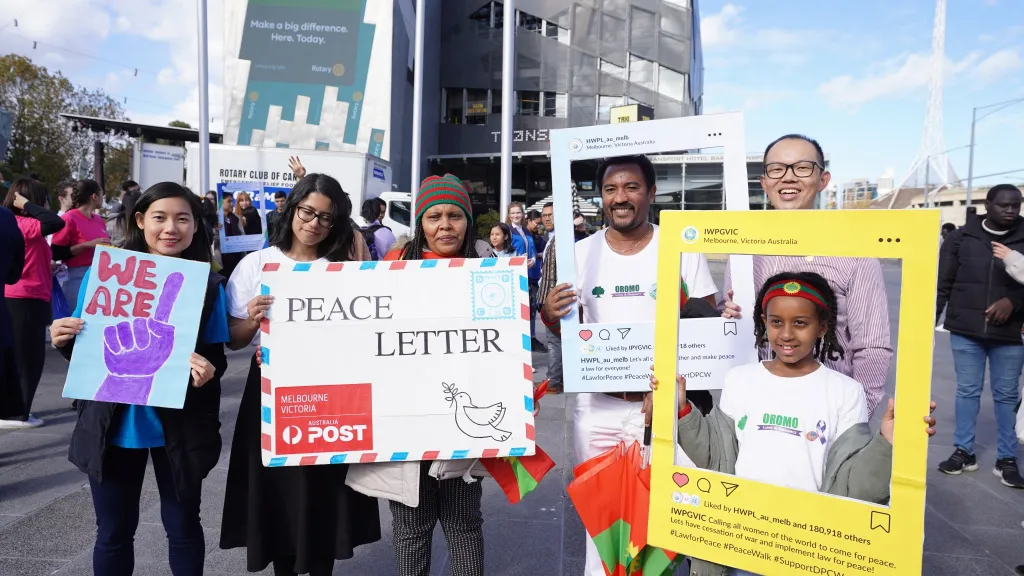
This aligns perfectly with the Oromo concept of Nagaa, which is not merely the absence of war but a holistic state encompassing peace with God (Waaqa), the land (Lafa), and people (Namaa), thereby integrating the spiritual (inner), ecological, and social dimensions into a single, profound ideal.
Leave a Reply