

Feature Commentary: The Oromo Voice for Peace in Oromia – A Testament to Resilience and Vision
At a moment when simplistic headlines often reduce the story of Oromia to one of conflict, a deeper, more profound narrative pulses beneath the surface: the powerful and persistent Oromo voice for peace. This is not a whisper from the sidelines, but a resonant chorus rising from the heart of the nation, rooted in a history that understands the devastating cost of war and the sacred value of nagaa (peace).
The call for peace from within Oromia is uniquely powerful because it is a call born of immense sacrifice and an unwavering commitment to justice. It emerges not from a place of complacency, but from a people who have endured generations of political marginalization, cultural suppression, and violent subjugation. To have weathered the storms of empire, the brutal Derg regime, and cycles of recent instability, and yet to consistently center peace in their aspirations, is a testament to a profound civilizational ethos. The Oromo concept of peace, nagaa, is not merely the absence of violence; it is a holistic state of balance, justice, social harmony, and well-being—a core tenet of the Gadaa system.
Therefore, the Oromo voice for peace is inherently radical. It is a voice that says:
- Peace is not surrender. It is the condition necessary for the full realization of the Oromo people’s legitimate rights to self-determination, cultural flourishing, and equitable development—the very goals of their long struggle.
- Peace is not forgetting. It is the path to achieving accountability for past and present injustices, ensuring that wounds are healed through truth and equity, not papered over by silence.
- Peace is the logical conclusion of liberation. The ultimate aim of the Oromo quest for bilisummaa (freedom) is to live in a secure, prosperous, and self-governing Oromia. Endless conflict is the antithesis of that goal.
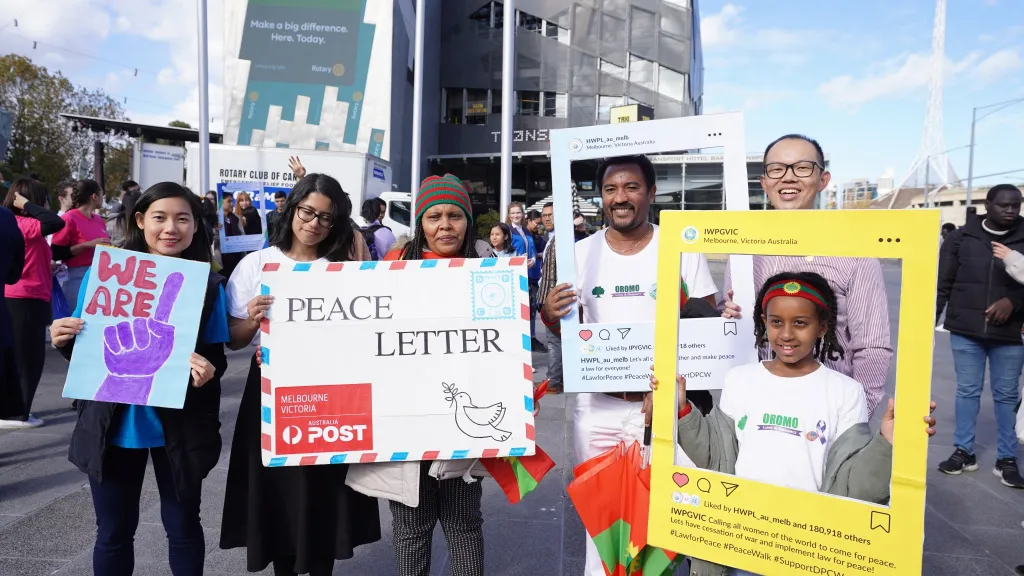
This voice manifests in myriad ways. It is in the courageous work of elders and religious leaders mediating between communities to prevent cyclic violence. It is in the defiant poetry and songs of artists who channel collective grief into calls for reconciliation. It is in the protests of youth who, while demanding rights, consistently organize under banners of peace. It is in the intellectual labor of scholars and activists who articulate frameworks for a just, federal democracy where Oromia’s place is secure and its people thriving.
Critically, this internal voice for peace is also a sober and strategic one. It recognizes that the instability engulfing Oromia—be it from armed insurgencies, state security operations, or inter-communal tensions—serves only to perpetuate suffering, displace millions, and destroy the very fabric of society. It understands that a securitized, militarized Oromia is a setback for all Oromos and for Ethiopia as a whole.
To dismiss this voice as naive or conciliatory is to misunderstand the Oromo struggle entirely. The most resilient fighters are often the most ardent advocates for peace, because they have seen the horror of the alternative up close. The demand for peace is, in fact, the highest form of patriotism—a demand for a future where Oromo children are raised in safety, where Oromo farmers tend their land without fear, and where Oromo culture and language are not just preserved but vibrant.
The path forward for Oromia and Ethiopia is precarious. Yet, the most reliable compass is this indigenous, deeply rooted, and morally clear Oromo voice for peace. It is a voice that carries the wisdom of the Gadaa tradition, the pain of historical memory, and the fierce hope for a future built on nagaa and justice. Amplifying this voice is not just an act of solidarity; it is an acknowledgment that within it lies the blueprint for a truly sustainable and dignified peace for all.
Leave a Reply